🚚 Free Worldwide Shipping on All Orders!Shop Now
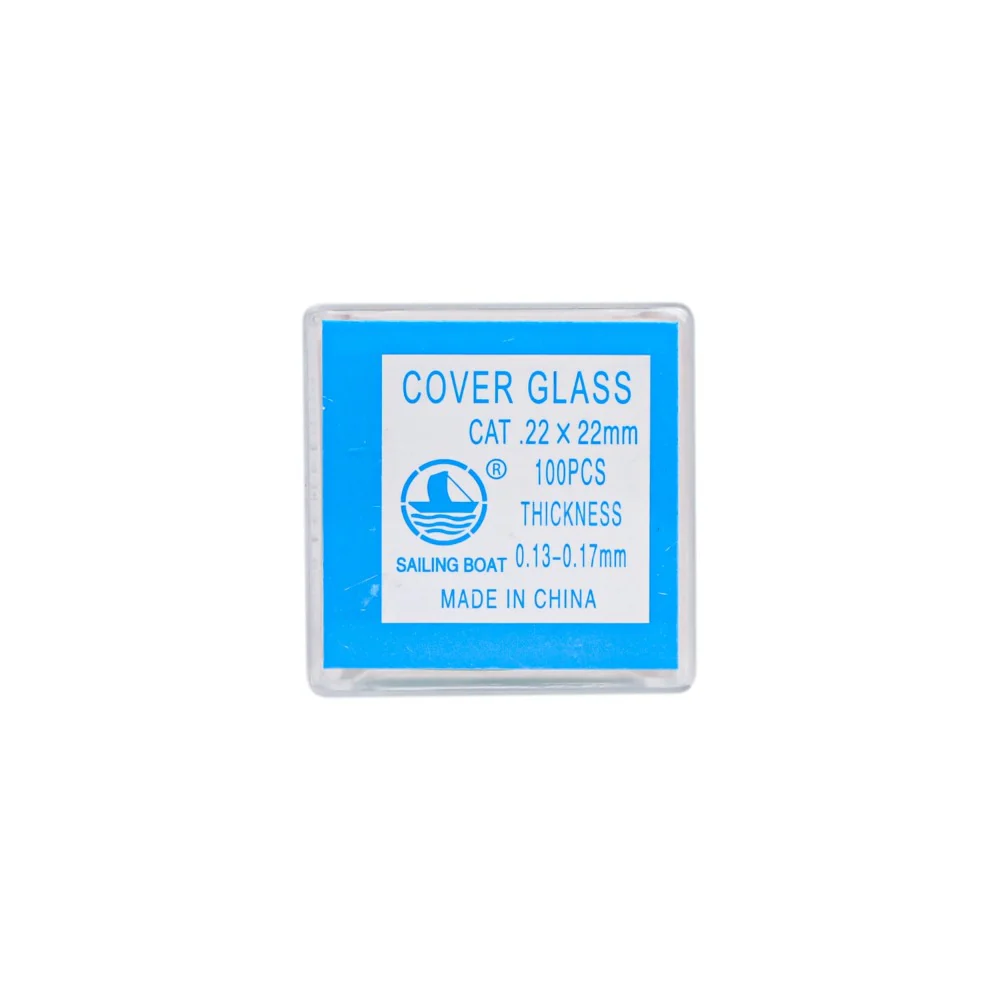
Cover Slip 100'S
- With a well-fitting Cover Slip, your specimens remain secure and protected throughout the process.
- It is a small, thin piece of glass used in microscopy to hold the specimen in place and protect it from dust and accidental contact.
- When placed on top of a specimen, they create a sealed chamber that prevents the specimen from drying out, getting contaminated, or being damaged during the observation.
- Also serves to flatten and spread the specimen evenly, reducing distortion or uneven thickness when viewed under the microscope.
- Compatible with various microscopy techniques, including light microscopy, phase-contrast microscopy, fluorescence microscopy, and electron microscopy, depending on the specific requirements of the study.
- With a well-fitting Cover Slip, your specimens remain secure and protected throughout the process.
- It is a small, thin piece of glass used in microscopy to hold the specimen in place and protect it from dust and accidental contact.
- When placed on top of a specimen, they create a sealed chamber that prevents the specimen from drying out, getting contaminated, or being damaged during the observation.
- Also serves to flatten and spread the specimen evenly, reducing distortion or uneven thickness when viewed under the microscope.
- Compatible with various microscopy techniques, including light microscopy, phase-contrast microscopy, fluorescence microscopy, and electron microscopy, depending on the specific requirements of the study.
$0.14
Original: $0.45
-69%Cover Slip 100'S—
$0.45
$0.14Description
- With a well-fitting Cover Slip, your specimens remain secure and protected throughout the process.
- It is a small, thin piece of glass used in microscopy to hold the specimen in place and protect it from dust and accidental contact.
- When placed on top of a specimen, they create a sealed chamber that prevents the specimen from drying out, getting contaminated, or being damaged during the observation.
- Also serves to flatten and spread the specimen evenly, reducing distortion or uneven thickness when viewed under the microscope.
- Compatible with various microscopy techniques, including light microscopy, phase-contrast microscopy, fluorescence microscopy, and electron microscopy, depending on the specific requirements of the study.